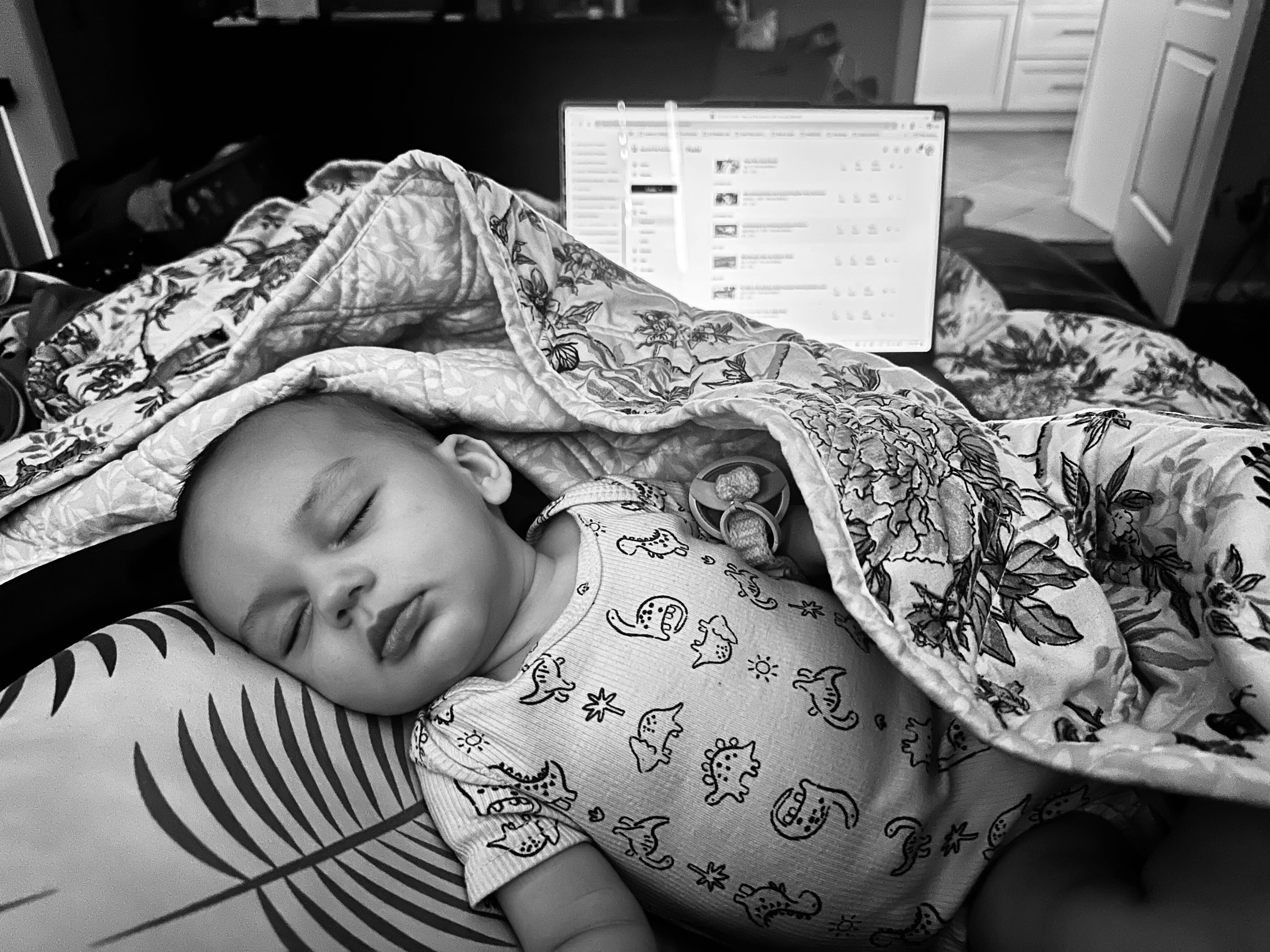
It was late evening, and the television hummed softly in the background. I was talking, playing, and doing all the things you do when you are trying to be present, but the mental clutter of the day still swirls around you. My son was fussy. He was overstimulated, I eventually realized, though it took me much longer than it should have to see it.
I changed his diaper. I tried to feed him. I rocked him gently and sang softly to him. He only cried louder, his tiny body tense with frustration. I felt my own anxiety rising to meet his, creating a cycle of stress that neither of us knew how to break.
So, I stopped trying.
This post explores a simple but profound piece of parenting wisdom I learned that night. By stepping away from the urge to constantly fix or entertain, we can uncover the natural mindfulness our children already possess. You will discover how to recognize the power of quiet moments, why humans are born with an innate sense of presence, and how we can protect this vital stillness for our children and ourselves.
The Power of Surrender
When my usual soothing strategies failed, I let go of the need to control the situation. I lay him on the breastfeeding pillow, resting against my body. I reached over and turned off every source of noise in the room. I stopped talking. I stopped shushing. I just sat with him.
I offered no music, no words, and no strategy. I didn’t try to calm him down, and I didn’t try to fix anything. We simply sat together and embraced the stillness.
Within seconds, he settled completely.
I watched as his little body released all its tension. I watched his eyes open wide—curious, soft, and entirely unhurried. He took in the dimly lit room as though he was seeing it for the very first time. And maybe, in that quiet moment, he truly was.
He wasn’t reacting anymore. He wasn’t reaching for anything, nor was he crying out for a solution. He was simply present. He was fully aware and fully himself. It was incredibly peaceful.
Embracing Quiet Moments Together
We stayed like that for some time, just the two of us, without a single word passing between us. Occasionally, our eyes would meet, and we would just hold each other’s gaze. Those brief seconds felt like something much longer—something significantly quieter than time itself.
Eventually, his eyes grew heavy. Without a single intervention, rock, or shush from me, he drifted off and fell asleep.
I sat there in the silence long afterward, thinking deeply about what I had just witnessed. He didn’t need to be fixed or managed. He just needed the noise to stop.
This realization struck me as a profound piece of parenting wisdom. We often feel immense pressure to actively soothe our children, layering more stimulation onto an already overloaded nervous system. Yet, sometimes the most loving action we can take is to strip away the excess and simply share a quiet space.
Born Into Presence: The Mindfulness We Forgot
The profound shift I witnessed stayed with me. I could not shake this compelling thought: we were all born exactly like this.
Before the screens turned on and the endless schedules began, we lived in a state of pure awareness. Before we received a pacifier every time we made a sound, or entertainment every time we sat still, we understood how to exist simply. Before society praised us for performing and redirected us when we simply were, we arrived in this world in a natural state of presence.
We were wide open. We were completely aware and uncluttered by the anxieties of the past or the future. This is the very definition of natural mindfulness.
And almost immediately, we began receiving distractions.
I do not say this as a criticism of parents, myself included. We live in a noisy, demanding society, and we naturally pass on the environment that surrounds us. But there is something incredibly valuable worth sitting with in that observation.
Reclaiming Stillness in Adulthood
We spend so much of our adult lives desperately trying to find our way back to stillness. We invest time and money in meditation apps, therapy sessions, silent retreats, self-help books, and daily practices. We search endlessly for a sense of peace that, if my son is any indication, we actually already knew.
We knew it deep in our bones before anyone taught us otherwise. We knew how to rest in quiet moments without feeling the urge to reach for a phone, turn on a podcast, or check a to-do list.
I think about the years I spent running from my own mind. I remember the background noise I kept playing just so I would not have to hear myself think. I look back at the busyness I routinely mistook for purpose, and the chronic overstimulation I proudly called productivity.
It took me so long—through so many unraveling seasons and intentional practices—to finally relearn what my infant knew naturally on a Tuesday evening in our living room. True presence is not something we achieve through hard work. It is simply something we return to when we strip away the noise.
Protecting the Quiet for the Next Generation
What if we actively protected that innate knowing?
What if, instead of filling every quiet moment with bright colors and loud stimulation, we allowed children to sit with silence long enough to become familiar with it?
We could teach them early on that the human mind does not always need entertainment. We could show them that something deeply trustworthy awaits them in stillness. What if we taught them that they can feel a difficult emotion without immediately needing to escape it? They could learn that discomfort will naturally pass if we simply stop fleeing it.
If we taught them these lessons well, they wouldn’t have to spend their entire adulthood trying to figure it out. They would carry this parenting wisdom forward, passing it down to their own children.
I am grateful for my son in ways I am still finding the right language for. He arrived carrying a deep wisdom his little body has not yet been taught to doubt. In that quiet room, with neither of us speaking and his eyes drifting closed, he reminded me that stillness is never emptiness. It is the most honest thing we have.
The noise will always return. The world will certainly see to that. But in the spaces between—in the brief moments when we turn everything off and simply sit—we catch a clear glimpse of who we were before we learned to be afraid of our own minds.
He didn’t need me to give him peace that night. He just needed me to stop taking it from him.
Next Steps for Reclaiming Your Quiet Moments
What would it look like to protect the quiet for the children in your life—and reclaim it for yourself? You can start integrating more stillness into your daily routine right now.
Here are a few actionable ways to practice mindfulness and embrace presence today:
- Implement a daily noise detox: Choose one 15-minute window each day to turn off the television, podcasts, and music. Sit in your living room or go for a walk with no audio input. Notice how your body physically reacts to the absence of noise.
- Delay the distraction response: The next time your child seems fussy, or you suddenly feel anxious, pause before offering a screen, a toy, or another distraction. Try simply sitting with the emotion for two full minutes.
- Create a quiet zone: Designate one room or corner of your home where screens and loud toys do not belong. Use this space for reading, resting, or simply watching the world outside the window.
- Practice shared stillness: If you have children, invite them to sit quietly with you for just one minute. You can call it a “listening game” to see how many subtle sounds you can hear when the house is totally quiet.
By taking these small steps, you can begin to honor the natural presence you were born with, making space for a more grounded, peaceful life.